


How to Find the Right Dentist for Seniors in Temecula
March 6, 2026
March 6, 2026
By age 64, the average American adult has three or more missing or decayed teeth.
It's not because they stopped caring, but because standard dental care was never designed for what aging actually does to the human mouth.
Thinning enamel. Receding gums. Bone loss. Dry mouth is triggered by medications that most older adults take every day.
These forces compound silently, and most dental offices — built around volume and insurance billing cycles — are not equipped to address them with the depth they require.
That gap is costly. It shows up as a tooth caught too late, a gum condition already advanced, a treatment plan so overwhelming you put it in a drawer and never went back.
Older adults don't just need more dental care. They need a different kind — one that accounts for how aging affects oral health, overall health, and well-being at the same time. Finding the right dentist for seniors, one with the clinical expertise and honest approach that complex adult cases demand, is the most important dental decision you can make after 50.
A geriatric dentist who specializes in mature adults brings a fundamentally different standard to every exam and every conversation.
What follows is a clear-eyed guide to understanding what your oral health actually needs and what becomes possible when you get care that was built for you.

Production-driven dental offices are built for speed, not depth.
For adults over 50 managing complex health histories and taking certain medications daily, that model doesn't just fall short, it actively misses what matters most.
More than 400 common medications — including blood pressure drugs, antihistamines, and antidepressants — list dry mouth as a side effect.
Without adequate saliva flow, bacterial buildup and plaque buildup accelerate rapidly, turning routine tooth decay into a compounding problem that a quick cleaning appointment will not catch or correct.
Early-stage gum disease causes no pain.
By the time it becomes noticeable, periodontal disease has often already triggered bone loss in the jaw, making future dental implants or denture fitting significantly more complex. Regular dental visits at a practice not trained to screen for age-specific oral health issues will miss this progression entirely.
Research consistently links poor dental health to heart disease, diabetes, and respiratory infections.
For older adults, untreated oral health problems do not stay in the mouth — they compound into broader health issues that are far more expensive to reverse than to prevent.
When patients feel rushed or overwhelmed by unexplained treatment plans, they stop coming back. That gap in routine dental care is where oral cancer goes unscreened, tooth loss accelerates, and manageable conditions become reconstructive ones.
The damage rarely announces itself until it is already extensive.
That's because the wrong dental practice doesn't seem dangerous. It feels routine. For adults over 50, that false sense of normalcy is precisely what allows small, manageable oral health problems to silently become irreversible ones.
Most adults over 50 aren't looking for a dentist who does more.
They're looking for one who understands more. They want dental care that takes the full picture into account of how aging, systemic health, and decades of dental history intersect in ways that require a fundamentally different clinical approach.
Senior dental care done right is not a collection of procedures. It is a coordinated system of personalized care built around one patient, one complete picture, and one honest conversation at a time.
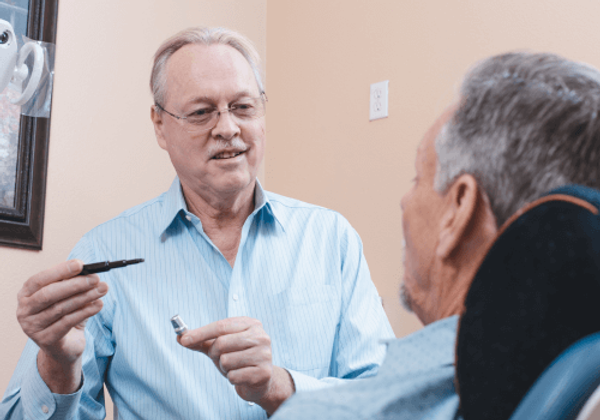
Maintaining optimal oral health after 50 requires a dentist who understands that dry mouth, gum tissue recession, bone density loss, and cardiovascular health are not separate problems to be treated in isolation. They demand a systematic, holistic approach.
Dental professionals who specialize in geriatric dentistry are trained to see that picture clearly and build a treatment plan that addresses it completely, without unnecessary procedures or referrals that fragment care.
Adult Dentistry — the specialized model of senior dental care practiced at The Center for Adult Dentistry — begins with something most dental offices do not make time for: a slow, honest conversation.
Every treatment plan is co-created with the patient, grounded in patient education, and designed around what they actually need for long-term oral health.
Comprehensive dental services, including restorative dentistry, dental implants, periodontal care, and cosmetic dentistry, are all delivered under one roof, by one trusted team that knows your name and your history.
Optimal oral health at this stage means more than clean teeth. It means preserving what you have, replacing what is gone, and managing what is coming before it becomes a crisis.
An adult dentist approaches restorative dentistry conservatively — using crowns, root canals, and periodontal therapy to extend the life of natural teeth rather than defaulting to extraction. Every tooth saved protects jawbone density and reduces the complexity of future care.
Every missing tooth left unreplaced starts a countdown. The jawbone beneath it begins to resorb within months. Dental implants placed before the loss advances too far restore function, halt deterioration, and support good oral health for decades.
Dry mouth, cardiovascular conditions, diabetes, and the medications used to manage them all directly affect oral health outcomes. A personalized care plan that accounts for a patient's full medical picture — not just their teeth — is the only standard that reliably supports long-term oral health and overall well-being.
Finding a dentist who operates at this level changes everything for older adults, not just the clinical outcomes, but the entire experience of being a dental patient.
Most dental offices ask you to trust them.
The Center for Adult Dentistry gives you a reason to.
Dr. Dave Cutts, a trusted dentist with 40+ years of complex case experience, built this practice on one principle: listen first, treat only what is needed, and never let a patient leave confused about their own oral health.
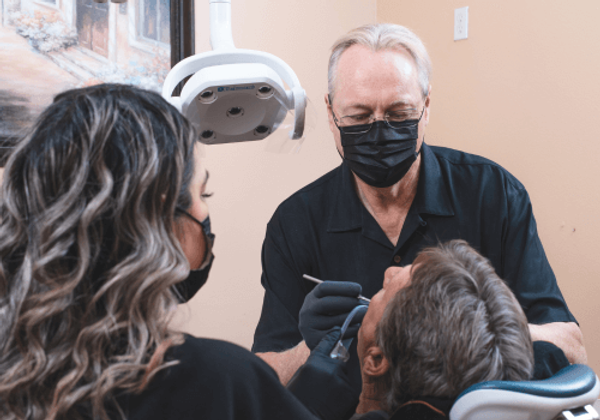
The Center for Adult Dentistry offers comprehensive dental services — dental implants, snap-in dentures, smile makeovers, root canals, periodontal care, sedation dentistry, and restorative treatments — at two locations in Temecula, CA and La Quinta, CA.
Complex cases get one experienced team, one cohesive treatment plan, and a dental office that knows their full history.
An in-house Master Technician crafts Premium All-Natural Dentures with precision and quality that outsourced labs cannot match.
For patients who have avoided a trip to the dentist due to fear, we offer compassionate care in a relaxed, pressure-free environment where comfort is a clinical priority.
Every new patient receives a complimentary consultation — full examination, up to three X-rays, and every question answered.
Patients leave with a clear understanding of their oral health and ongoing education about their options. No pressure. No sales. Just honest care from a Temecula dentist who puts the patient first.
The Center for Adult Dentistry is for adults who are done settling and ready for a practice built for them.
One of the needs we so most is gum disease.
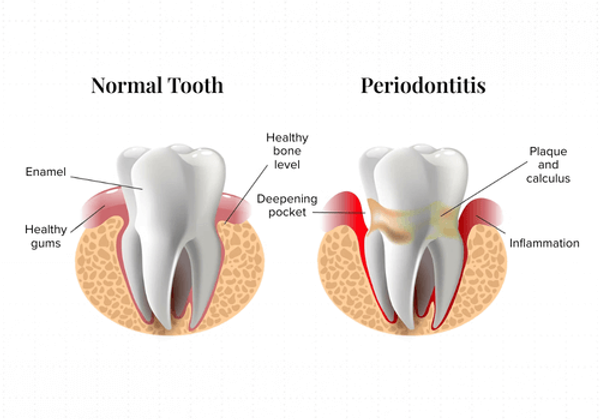
Gum disease is the leading cause of tooth loss among adults and the most underestimated. Unlike tooth decay, periodontal disease progresses without pain.
Gum tissue recedes quietly, bone loss advances without discomfort, and by the time symptoms appear, the structural damage is often already irreversible. Studies show nearly 70% of adults 65 and older have some form of gum disease, making it the norm among seniors, not the exception.
The clinical cost of this compounds fast.
Untreated periodontal disease weakens natural teeth, accelerates bone loss, and makes future dental implants and denture fitting significantly more complex. What routine cleanings and regular dental check-ups could have caught early becomes a reconstructive challenge — far more involved and expensive than early detection would have required.
Standard dental visits focused on surface cleaning do not constitute a full periodontal evaluation.
Maintaining optimal oral health after 50 requires a geriatric dentist who assesses gum tissue depth, monitors bone density, and connects a patient's full medical picture to their dental health at every routine exam.
That deeper evaluation is what separates good dental health from merely adequate.
But gum disease isn't the only concern for older adults.
Aging does not attack oral health one problem at a time. It compounds, and most standard dental checkups are not built to see the full picture.
Over 400 common medications cause dry mouth as a side effect. Without adequate saliva flow, the mouth loses its natural defense against bacterial buildup — and tooth decay accelerates dramatically. Most standard dental visits never connect a patient's prescription list to their emerging dental problems. That missed link is where serious oral health damage quietly begins.
Enamel erosion weakens natural teeth from the outside. Receding gums expose root surfaces with no enamel protection at all. When patients have lost multiple teeth and delay replacing them, jawbone loss follows — affecting chewing, altering bite, and making future restorative options more complex. These conditions do not wait for each other. They accelerate together.
Fluoride treatments and fluoride toothpaste help slow enamel erosion and reduce decay risk. Partial dentures and dental implants restore function before bone loss advances. Regular visits focused on a patient's complete dental needs — not just a surface cleaning — are what maintain function and prevent the kind of compounding damage that reactive treatment cannot fully undo.
The seniors who maintain the best long-term oral health aren't the ones who wait until something hurts. They're the ones who found a practice that treated preventive care as seriously as it demands.
The transformation when you get the right care is immediate and profound.
Dental implants replace missing teeth and protect jawbone integrity. Gum disease gets arrested before it triggers further tooth loss. Dry mouth and enamel erosion are managed proactively with fluoride treatments rather than being treated expensively after the fact. Restorative treatments, dentures, cosmetic dentistry, and teeth whitening restore a confident smile that senior patients stopped believing was possible. Good dental health at this stage does not just protect teeth — it protects overall well-being.
The less visible changes matter just as much. Eating the foods they love. Smiling without hesitation. Walking into dental visits without dread.
For adults who spent years avoiding dental care, finding a practice built around their actual oral health needs replaces anxiety with trust and isolated dental treatment with a long-term relationship that screens for oral cancer, monitors systemic health connections, and keeps them healthy for decades.
Finding a good dentist is important. But the end goal for older adults should be to find a fundamentally different standard of dental care — one built around listening first, offering real choices, co-creating the treatment plan, and never recommending what the patient does not need.
This is the standard Dr. Dave Cutts built The Center for Adult Dentistry around. It is what separates genuine senior dental care from a general practice that happens to see older patients.
The best dentist for adults over 50 isn't the one with the most procedures on the menu. It's the one who treats long-term oral health as seriously as immediate dental needs — who connects oral health to overall health, monitors systemic risk factors, and delivers
comprehensive dental services without pressure, without guesswork, and without ever making a patient feel like a chart number.
That is what our practice in Temecula, CA, and La Quinta, CA, looks like.
The Center for Adult Dentistry is not a dental office to try. It is a dental home to stay for adults who are done being rushed, overtreated, or ignored, and who are ready for care that keeps their smile healthy, supports their well-being, and earns their trust every single visit.
If that is the standard you are looking for, schedule your complimentary consultation with Dr. Cutts today. Get a full examination, up to three X-rays, and every question answered, at no cost to you.
Many dental practices do not offer formal senior discounts, but The Center for Adult Dentistry offers something more valuable — a complimentary new patient consultation worth $375, including a full examination, up to three X-rays, and a thorough treatment description with every question answered. For ongoing dental treatment, flexible payment options, including CareCredit and Cherry financing, make accessing expert senior dental care manageable regardless of budget.
A geriatric dentist specializes in the unique oral health needs of older adults — including age-related tooth decay, gum disease, dry mouth, bone loss, and complex restorative cases that general dental professionals are not specifically trained to manage. For adults over 50, choosing a dentist for seniors with geriatric expertise means receiving dental care built around the full picture of how aging affects oral health, not just isolated symptoms.
Original Medicare and Medigap do not cover routine dental care. Certain Medicare Advantage plans may include dental coverage, so it is worth verifying your specific plan before scheduling. The Center for Adult Dentistry accepts PPO plans and offers third-party financing options to help patients access the dental health care they need without delay.
Most PPO dental insurance plans cover 100% of preventive care, 80% of basic procedures such as fillings, and 50% of major procedures such as crowns or dental implants — after the annual deductible is met. Patients are responsible for the remaining balance. The Center for Adult Dentistry works to maximize what your insurance covers while presenting transparent, honest treatment options that align with your actual dental needs.
Yes — dental visits remain a personal expense for most adults over 60, with costs offset by insurance coverage where applicable. However, maintaining oral health through regular dental check-ups and routine dental care is significantly less expensive than treating the conditions that develop when care is delayed. The complimentary consultation at The Center for Adult Dentistry is the lowest-risk first step toward good oral health — with no obligation and no pressure to commit to anything before you are ready.
You’ve dealt with the pain, discomfort, and anxiety long enough.
Sign up for a free consultation with Dr. Cutts and get a treatment plan built around your actual needs.
.webp)
The Center for Adult Dentistry is a Temecula dental practice built for adults 55 and older. We restore function, confidence, and the freedom to fully enjoy the life you have worked so hard to build.

43057 Margarita Rd #101 Temecula, CA 92592

877-628-1735
79440 Corporate Centre Dr, #103 La Quinta, CA 92247

8:00AM - 5:00PM
8:00AM - 2:00PM

By Appointment Only
Closed